

There is a phrase the sports industry has used for over a decade that quietly misdirects the entire conversation. "Second screen." It implies a hierarchy. The broadcast is first. The phone is second. The real experience is on the television, and the device in the fan's hand is a distraction, a sidebar, a supplement.
That framing is wrong, and it has been wrong for some time. For a growing share of sports fans, the phone is not the second screen. It is the primary interface through which they experience, react to, and share the event. The broadcast is background. The phone is where the relationship lives.
The numbers have already shifted
According to Deloitte's Sports Industry Outlook, more than 90% of Gen Z and millennial fans engage with sports content through social media. WSC Sports research found that Gen Z fans engage in second-screen activities at rates approximately 10% higher than older demographics, with 61% watching live sports alongside others and 50% simultaneously engaging on social media during broadcasts.
The second-screen sports apps market is growing rapidly, according to Fact.MR's market analysis. Nielsen research shows increasing multiplatform viewing adoption as audiences follow sport across streaming, social, and mobile channels simultaneously. The trajectory is clear and accelerating.
This is not about younger fans being less committed. It is about a fundamental change in what "watching sport" means. For previous generations, watching meant sitting in front of a screen. For current and emerging audiences, watching means participating, reacting, sharing, commenting, predicting, and creating, all in real time, and almost all of it on the phone.
The participation layer is mobile
If the phone is where the fan's attention lives during a sporting event, then mobile is where engagement infrastructure needs to be. Not as an afterthought. Not as a companion app that mirrors the broadcast. As the primary channel through which the rights owner builds a relationship with the fan.

This is where most properties fall short. They have invested in broadcast deals, stadium technology, and social content teams. But the mobile touchpoint, the thing that is literally in the fan's hand at the moment of peak emotion, is often the least developed part of the engagement stack.
The opportunity is not to fight the phone. It is to be on it. When a fan reaches for their device at the moment a goal goes in, what do they find? If the answer is Instagram or X, the rights owner has lost the moment to a platform that will keep the data and the relationship. If the answer is a branded, owned engagement experience, the rights owner captures the identity, the emotion, and the signal.
What a mobile-first engagement layer looks like
A genuine mobile engagement layer is not an app that shows fixtures and scores. Those exist in abundance and they do not move the commercial needle. A mobile-first engagement layer is one that gives the fan something to do at the moments that matter most, something expressive, shareable, and emotionally resonant.
This is where Fan Moments and similar participation mechanics become structurally important. They live on the device the fan is already holding. They activate at the moment the fan is most emotionally invested. They produce rich media that the fan wants to keep and share. And they capture consented first-party data that the property owns entirely.
The distinction matters because mobile engagement is not a feature request. It is the front door. The fan who captures a moment on their phone during a match has engaged more deeply, more personally, and more measurably than the fan who watched the same match on television and changed the channel at full time. The phone is where intent becomes action, and action becomes data.
The stadium angle
This shift is equally visible inside the stadium. Research from Foley and Lardner on stadium technology in 2026 highlights how data collection, connectivity, and new operating models are reshaping the in-venue experience. The 2026 FIFA World Cup distributed 4.2 million Fan IDs with a 37% activation rate, according to FIFA's own reporting, with 50 million aggregated users across its tournament and official apps.
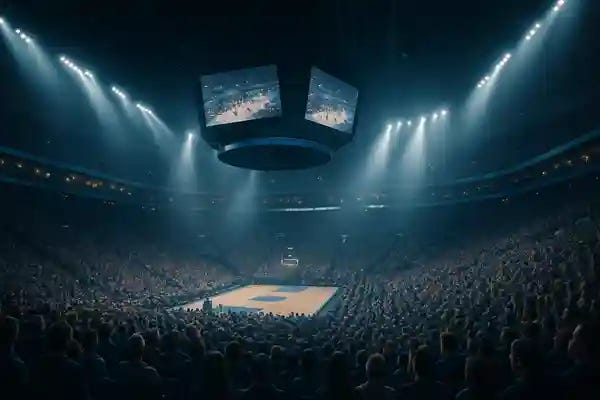
The stadium is no longer a place where fans leave their digital lives at the gate. It is a connected environment where every moment is potentially captured, shared, and measured. The properties that build mobile engagement into the live experience, rather than bolting it on as a side project, are the ones capturing the identity and behaviour data that sponsors increasingly demand.
Stop calling it the second screen
Language shapes strategy. As long as the industry calls the phone a "second screen," it will treat mobile engagement as secondary. The reality is that for the majority of fans, across most demographics, the phone is the device through which they express their fandom, share their emotions, and make their purchasing decisions.
The question for rights owners is not whether their fans are on their phones. They are. The question is whether the property has given them a reason to engage there, inside an owned environment, at the moment that matters most.
The broadcast is still important. The stadium is still important. But the screen that actually captures the fan's identity, intent, and emotion is the one in their hand. It is time the industry treated it that way.