

The 2026 FIFA World Cup has been, by every measurable dimension, the largest sporting event ever staged. Through the Round of 16 alone, 6.25 million spectators attended matches at 99.7% stadium occupancy. FIFA's digital platforms recorded 20 billion video views, 30 billion impressions, and 1.7 billion engagements across TikTok and YouTube combined. The tournament app attracted 50 million aggregated users. Social media impressions were up 130%, engagement up 160%, and video views up 485% compared to the equivalent stage of the 2022 tournament.
These are staggering numbers. And for most of the federations whose teams played in the tournament, almost none of this data belongs to them.
The platform paradox
The World Cup is the clearest illustration of a pattern that repeats across sport at every level. A major event generates an enormous spike in fan emotion, attention, and digital activity. That activity overwhelmingly flows to platforms the rights owner does not control. FIFA captured some of it directly, distributing 4.2 million Fan IDs with a 37% activation rate and adding 3.1 million FIFA Rewards members. But the vast majority of the digital engagement, the 54 million new social followers, the 23 million new TikTok followers, the billions of views and impressions, lives on platforms that will charge the federation to reach those same fans tomorrow.
For the individual member associations, the situation is starker still. A qualifying nation might see its social following surge during the tournament, its content shared millions of times, its players become globally recognisable. But when the tournament ends and the players fly home, the federation's owned database looks much the same as it did before. The fans came, they watched, they celebrated, and then they disappeared back into the platforms.
What the data actually shows
Cloudflare's analysis of global internet traffic during the tournament revealed the scale of digital fan behaviour in real time. Matches during overnight and early morning hours caused traffic to more than double normal baseline levels in the competing nations. Daytime matches saw traffic drop to approximately 70% of typical values as fans shifted entirely to live viewing. The Argentina versus Switzerland quarterfinal moved global internet traffic by a factor of 1.26, making it the single most impactful match of the tournament by that measure.

These patterns tell us something important. Fans are not passively consuming the World Cup. They are actively engaging, streaming, searching, sharing, reacting, and betting, in massive, measurable, real-time spikes that track precisely to the emotional peaks of the event. The data is there. The question is who captures it.
In high-adoption streaming nations like Algeria, Tunisia, Jordan, Egypt, and the Democratic Republic of Congo, traffic patterns showed sharp increases at kickoff driven by multimedia streaming, with noticeable drops during halftime. In lower streaming reliance countries, general browsing traffic increased during halftime and hydration breaks as fans searched for highlights, commentary, and social reaction. Every one of these behavioural signals is commercially valuable. And almost none of it is flowing into federation-owned databases.
The missed opportunity is structural
The issue is not that federations lack ambition. Many have digital strategies, apps, and social teams. The issue is that the infrastructure to capture fan identity and engagement data at scale, in real time, during the moments that matter most, is simply not in place at most national associations.
Consider what a federation could capture during a World Cup match if the infrastructure existed. Every fan who opens a branded engagement experience on their phone at the moment of a goal. Every photo and video captured through an owned participation mechanic. Every identity consented during a moment of genuine emotional investment. Every piece of rich media that shows who was there, how they felt, and what they did. That is not speculative. It is exactly what is possible when the right engagement layer sits between the fan and the moment.
Instead, what most federations capture is this: a spike in social followers they cannot contact, a surge in website traffic they cannot identify, and a feeling that something significant happened but no structured data to prove it.
What this means for the next cycle
The lesson of the 2026 World Cup is not that sport needs more reach. It has more reach than it has ever had. The lesson is that reach without capture is a gift to platforms, not to properties.
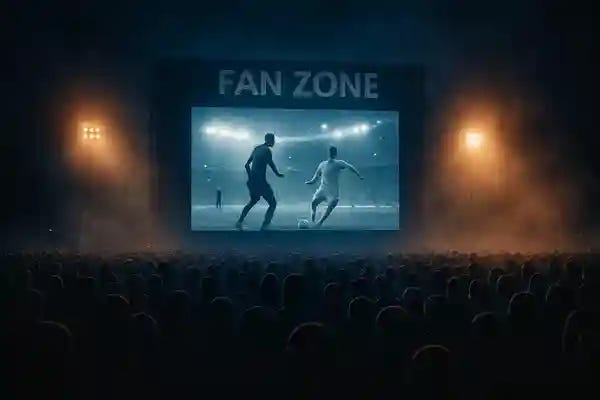
The federations that invested in owned fan engagement infrastructure before the tournament, those with participation mechanics, Fan ID systems, and consented data collection built into the live experience, emerged from the World Cup with an asset they can compound. They know who their fans are. They can segment by behaviour, not just geography. They can go to sponsors with proof, not estimates.
The federations that did not are left with social metrics they cannot monetise and a window of attention that closed the moment their team's last match ended.
The data rush is not over
Major events will keep coming. The Champions League, the Olympics, domestic league seasons, continental championships. Each one generates the same spike in fan attention, the same emotional peaks, the same opportunity to convert anonymous passion into known relationships. The question is not whether the data rush will happen. It will. The question is whether the property is set up to capture any of it.
The World Cup showed what the ceiling looks like. 6.25 million in the stadiums. 20 billion views on screen. Billions of interactions across the digital ecosystem. Somewhere inside those numbers are the fans that every federation, every league, and every sponsor wants to reach. The properties that build the infrastructure to find them will own the most valuable audience asset in sport. The ones that do not will watch it flow past, again, and wonder where it went.